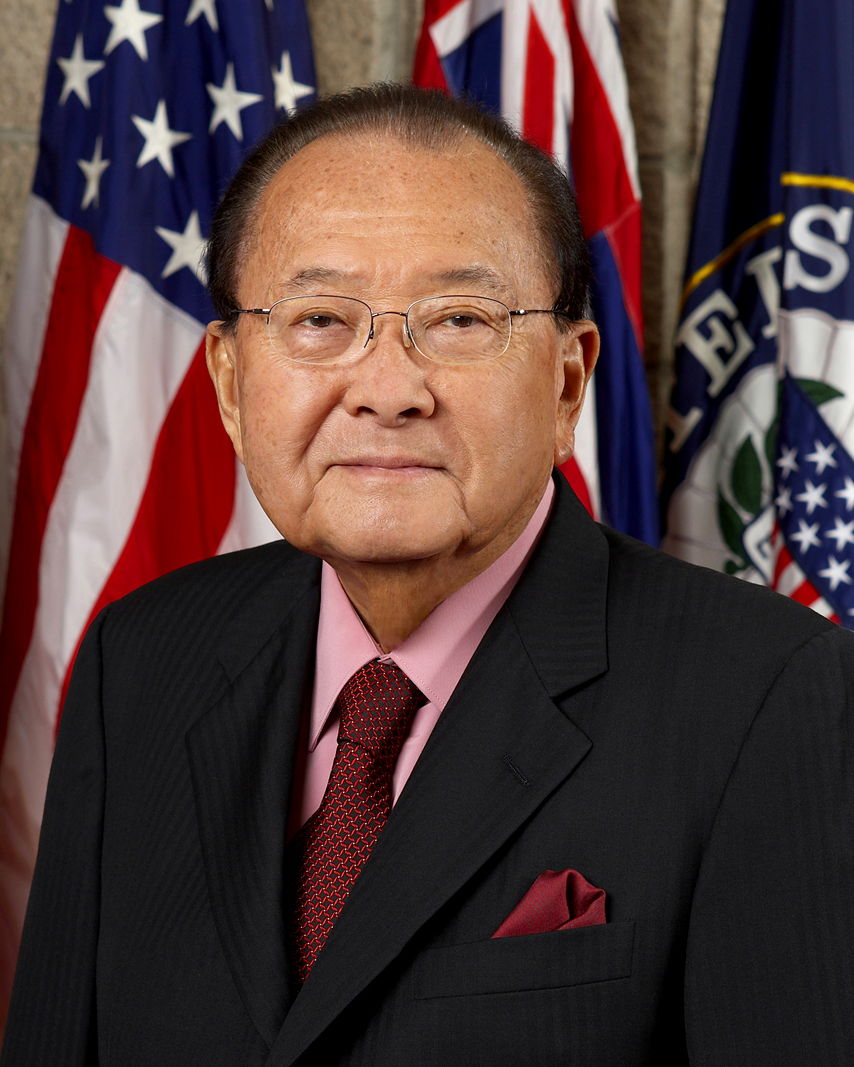
2nd Lt, U.S. Army — World War II
Daniel Ken Inouye was born on September 7, 1924, in Honolulu, Hawaii, the son of Japanese immigrants — a Nisei, a second-generation Japanese American. He was a high school senior serving as a Red Cross volunteer first-aid instructor when he watched Japanese planes attack Pearl Harbor on December 7, 1941, and spent that day helping treat injured civilians. Although his own government classified Japanese Americans as “enemy aliens” and barred them from military service, Inouye enrolled at the University of Hawaii as a premedical student and waited for his chance to serve.
That chance came in March 1943 with the formation of the 442nd Regimental Combat Team, the famed all-Nisei “Go for Broke” unit. Inouye fought with the 442nd in Italy and France, earned a battlefield commission during the rescue of the trapped “Lost Battalion” in the Vosges Mountains, and once survived a bullet to the chest that was stopped by two silver dollars stacked in his shirt pocket.
On April 21, 1945, Second Lieutenant Inouye led his platoon against the fortified Colle Musatello ridge near San Terenzo, Italy, part of the German Gothic Line. Shot in the stomach, he kept attacking and helped knock out two machine-gun nests. Crawling toward the third, he was cocking his arm to throw a grenade when a German rifle grenade shattered his right arm at the elbow — leaving his own live grenade clenched in the fist of his severed hand. Ordering his men to stay back, he pried the grenade loose with his left hand and threw it into the bunker, then fought on until a fifth wound dropped him. “Nobody called off the war!” he told his men as he was carried away. His right arm was amputated, and the ridge was taken without the loss of a single man in his platoon.
Inouye received the Distinguished Service Cross, but his comrades long believed his heritage had cost him the Medal of Honor. In 2000, after an official review of such records, President Bill Clinton presented him the Medal of Honor. By then Inouye was one of the most senior members of the U.S. Senate, representing Hawaii from 1963 until his death on December 17, 2012. He served as Senate president pro tempore and never lost an election in 58 years of public life. Honolulu’s airport now bears his name.
Sources: Wikipedia · Congressional Medal of Honor Society